

When Doing More Means Leading Less
Is it possible that your greatest strength as a technical expert could be holding your team back now that you’re a leader?
I recently came across a thought-provoking statement while reading Scaling Up by Verne Harnish:
“A leader’s strength may become the team’s weakness.”
This concept struck me deeply, especially when I considered how it applies to technical leaders. For those of us who have spent years honing our technical expertise, this pitfall can be particularly relevant—and dangerous.
The Bottleneck Effect
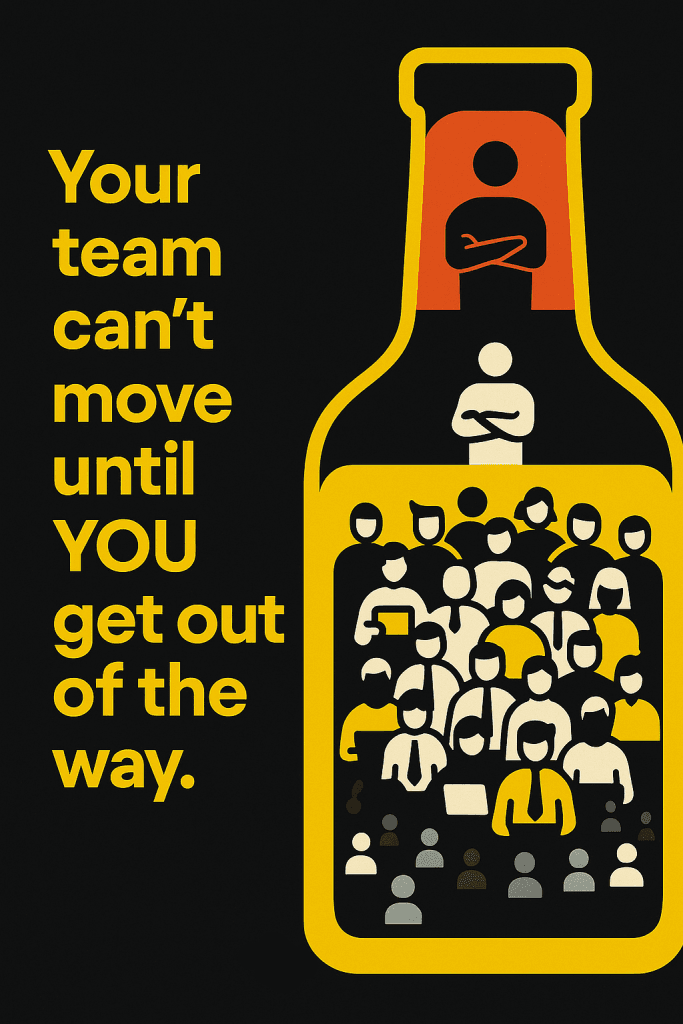
Think about it: you’ve built your career on being a technical expert. Your deep knowledge and problem-solving skills have earned you respect and credibility in your field. But now, as the leader of a team, those very strengths can unintentionally become a hindrance to your team’s growth and performance.
Here’s how it happens. When you step into a leadership role, it’s easy to fall into the trap of continuing to act as the technical expert. After all, it’s what you know, and it’s where you feel confident. At first, this might seem like a good thing. Your team benefits from your expertise, and you feel productive because you’re solving problems and driving results.
But over time, this dynamic can backfire.
As you continue to make the technical decisions, your team starts to pick up on the pattern. They notice that you’re the one who will ultimately decide or solve the problem, so they stop trying to do it themselves. Slowly but surely, they become more hesitant, more timid, and more reliant on you. Instead of stepping up to take ownership of decisions, they wait for your input.
What’s the result?
Your technical strength becomes the team’s bottleneck.
Every decision, every problem, every challenge has to go through you. This not only slows down the team’s progress but also stifles innovation and growth. Over time, your team’s confidence in their own abilities diminishes, and their development as independent thinkers and leaders stalls.
Real-World Example: The Over-Involved Leader
I recently worked with a mid-level engineering manager named Alex, who was known for his exceptional coding skills. When Alex transitioned to a leadership role, he struggled to let go of the technical work. He would jump into code reviews, rewrite sections of code himself, and even take over debugging sessions. His team initially appreciated his involvement—it felt like they had a safety net.
But soon, they began to rely on Alex for every technical decision.
When Alex went on a two-week vacation, the team found themselves paralyzed. They didn’t feel confident making decisions without him, and progress on their project ground to a halt. When Alex returned, he realized his hands-on approach had unintentionally created a dependency that got in the way both progress and creativity.
Why This Happens to Technical Leaders
This phenomenon is particularly common among technical leaders because of the unique journey they take to leadership. Unlike leaders in other fields, technical leaders often rise through the ranks based on their individual expertise. Their promotions are a recognition of their technical skills, not necessarily their leadership abilities.
When they step into a leadership role, it’s natural to default to what they know best—technical problem-solving. However, leadership requires a different skill set. It’s no longer about being the best individual contributor; it’s about enabling your team to perform at their best.
Breaking the Pattern: How to Prevent Becoming the Bottleneck
So, how can you prevent your strength from becoming your team’s weakness? Here are some strategies to consider:
- Shift Your Mindset: Recognize that your role as a leader is no longer to solve every problem but to create an environment where your team can solve problems independently. This requires a fundamental shift in how you view your value to the team.
- Delegate with Intention: Start by identifying tasks or decisions that your team is capable of handling without your input. Gradually delegate these responsibilities, and resist the urge to step in unless absolutely necessary. Remember, delegation is not about offloading work; it’s about empowering your team.
- Mentor and Develop Your Team: Invest time in coaching and mentoring your team members. Help them build the skills and confidence they need to make decisions and take ownership of their work. For example, you could create a decision-making framework that outlines when they should escalate issues to you and when they can proceed on their own.
- Celebrate Independence: When a team member successfully takes ownership of a task or solves a problem without your input, celebrate it. Acknowledge their contribution and reinforce the behavior you want to see more of.
- Conduct a Calendar Audit: Take a close look at how you’re spending your time. If your calendar is dominated by technical deep-dives rather than leadership activities like 1:1s, planning, and strategy, it’s time to make a change. Block out dedicated “leadership time” each week to focus on activities that will grow your team and advance your vision.
- Create Systems: Just as systems are crucial in technical work, they’re equally important in leadership. Develop systems and processes that enable your team to operate efficiently without relying on you. For example, implement a knowledge-sharing platform or establish clear protocols for decision-making.
- Seek Feedback: Regularly ask your team for feedback on your leadership style. Are there areas where they feel too dependent on you? Are there decisions or tasks they’d like more ownership of? Use this feedback to adjust your approach.
The Long-Term Benefits
When you step back from being the technical expert and focus on being a leader, amazing things can happen. Your team becomes more confident, more capable, and more innovative. They start to take ownership of their work, and you’ll find that you have more time to focus on the bigger picture—strategy, vision, and culture.
Leadership isn’t about being the smartest person in the room; it’s about building a room full of smart, empowered people.
By recognizing and addressing the ways your strengths might inadvertently weaken your team, you can create an environment where everyone thrives
Unlock Your Leadership Potential! 🎯
Are you ready to elevate your leadership skills and drive meaningful change within your team? Download my Core Leadership Navigator Guide today and discover essential skills that can transform your leadership journey. Whether you’re a seasoned leader or just starting out, this guide offers actionable insights and practical exercises to help you grow and succeed.

If you are ready for a growth partner who will help you set goals, measure progress and maintain accountability, get in touch with me.
💬 Join the conversation!
This article is also available on LinkedIn [link opens in new tab]
Your comments and insights help our entire leadership community grow.